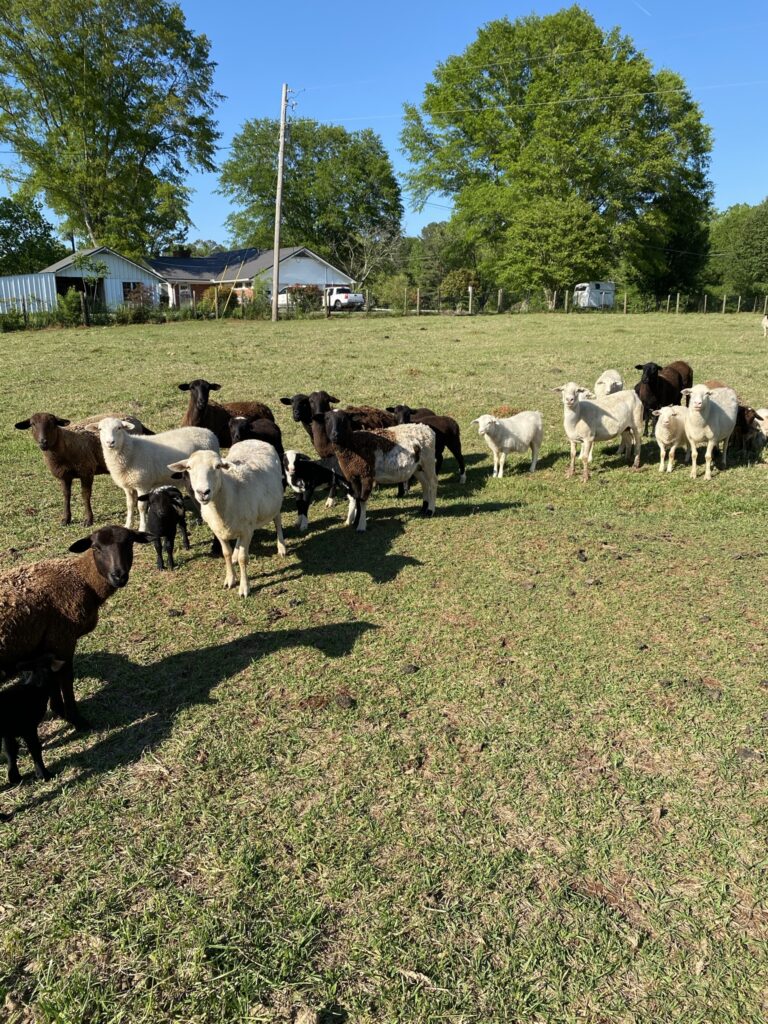
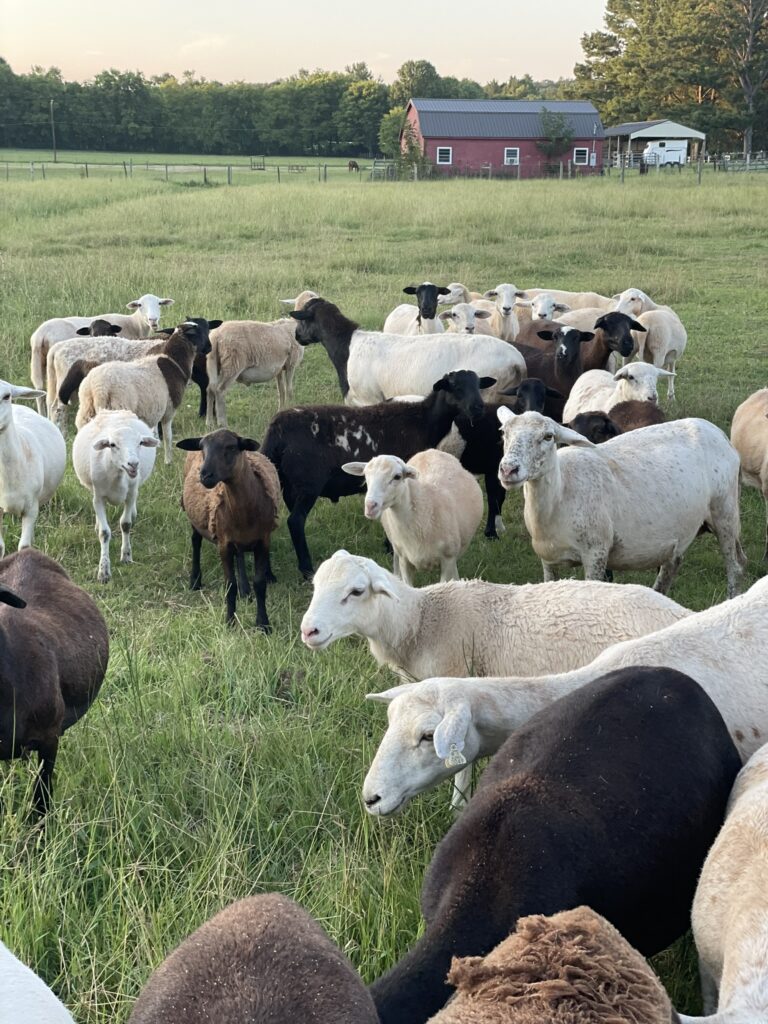
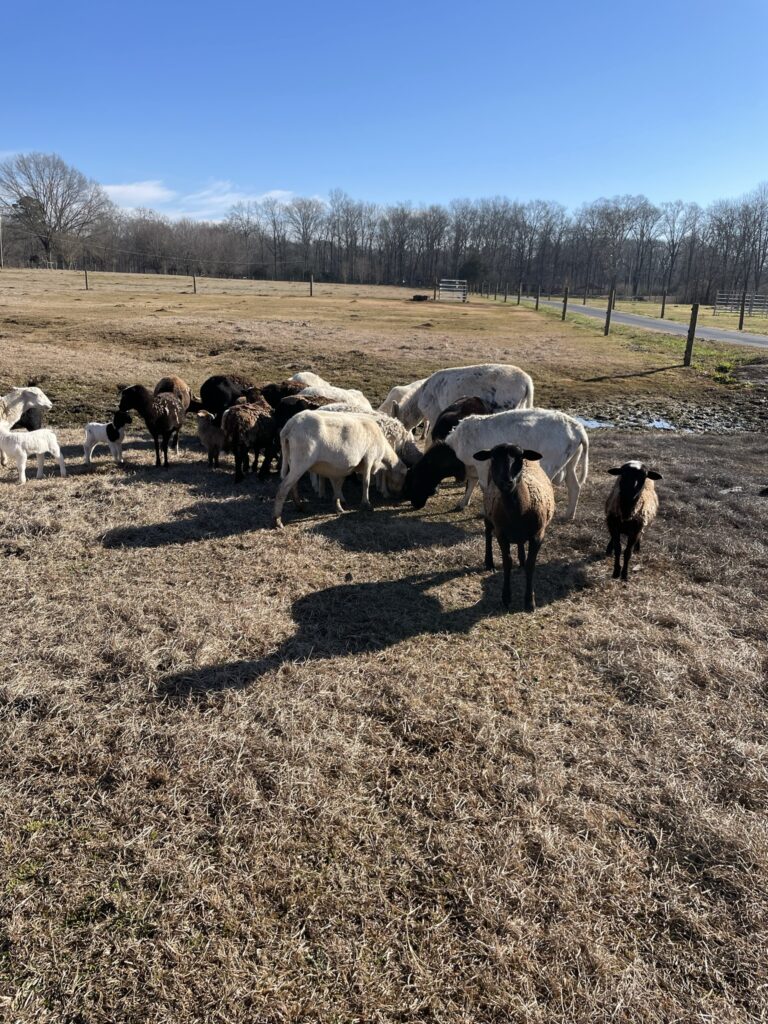
We keep a flock of 30 to 40 Katahdin and Dorper sheep in Montevallo. Both are hair sheep, so there’s no shearing. That leaves more time for what matters most: how they graze.
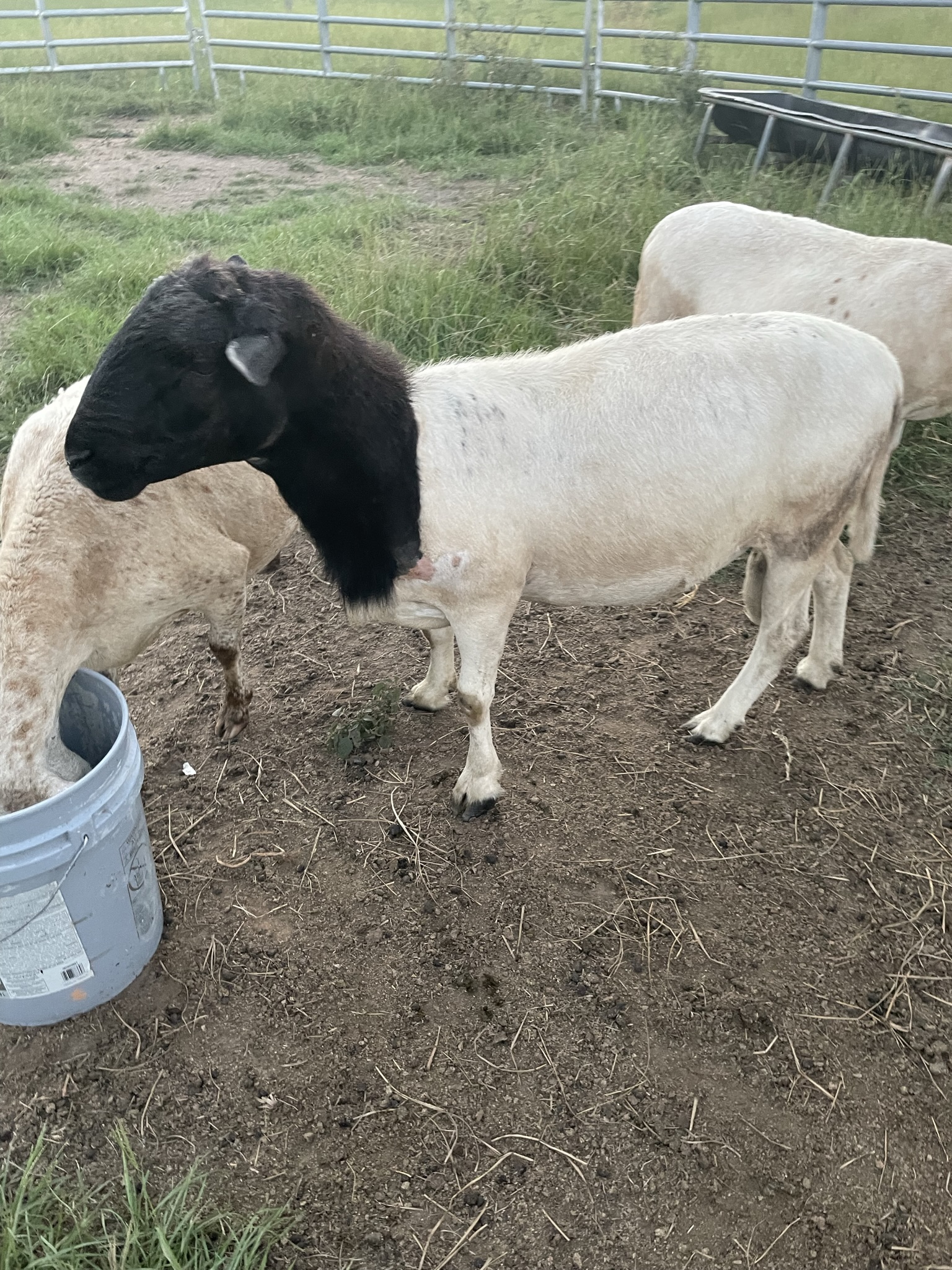
How we raise them
- Pasture-raised year-round, with hay as needed in winter
- Free-choice natural minerals at all times
- No routine dewormers. We control parasites through managed grazing, which keeps the flock healthy and high quality.
The flock on pasture
Why Katahdin × Dorper lamb tastes so good
A lot of people say they don’t like lamb because of one strong, “muttony” meal. Our lamb changes minds. We cross two breeds known for great-eating meat, raise them on grass and harvest them young, and the result is the best-tasting lamb we know of: mild, tender and rich without being gamey.
The Katahdin side: mild and lean
Katahdins were developed in Maine as a meat sheep, not a wool sheep. They’re known for a very mild flavor and a naturally lean, well-muscled carcass. They’re also hardy, good mothers and tolerant of parasites, which suits our grass-based, low-input way of raising them.
The Dorper side: built for the table
Dorpers were developed in South Africa specifically for meat. They’re thick and blocky, grow quickly on forage, and carry generous muscling through the leg, loin and rack: the cuts you actually want on your plate. Dorper lamb is also known for its mild taste.
Better together
- Mild flavor from both sides. Both breeds are hair sheep raised for meat, and both are prized for lamb that doesn’t taste strong or gamey.
- More meat on the bone. Dorper muscling plus Katahdin’s lean frame gives a meaty carcass with a good fat balance.
- Thrives on grass. The cross grows well on pasture, so our lambs finish on forage rather than heavy grain.
- Harvested young. Our lambs go to the processor at the right age and weight, so you get tender lamb, not mutton.
Try it once. Ground lamb in burgers, a slow-roasted leg or a few grilled chops is usually all it takes.
Freezer lamb, half or whole
We also offer pasture-raised lamb for the freezer, by the half or whole lamb. Download the cut sheet, choose your cuts, and email it to gerarjp@gmail.com or text a photo to (859) 351-3523 to reserve yours.
What it costs
Your total has two parts: the lamb itself, and the processor’s fee to cut and wrap it. Here’s how it adds up.
- 1. The lamb: about $9 per lb of hanging weight
- 2. Processing: $100 per lamb at a state-inspected plant in Clanton ($50 on a half)
Estimated total (lamb + processing)
- Whole lamb (about 45–55 lb hanging weight, roughly 30–40 lb of take-home lamb): lamb about $400–$500 + processing $100 = $500–$600
- Half lamb: lamb about $200–$250 + processing $50 = $250–$300
For budgeting purposes only. Your actual price depends on your lamb’s hanging weight and current rates. Processing prices are set by the processor and must be verified when you order. Call (859) 351-3523 for current pricing before you order.
Prefer a different processor? We can help arrange delivery to the processor of your choice.
Available now
Lambs are usually available. Call or text (859) 351-3523 to ask what we have right now or to get on the list.